Spotlight

Vick Ballard

Trust Spotlights

Vick Ballard

Share

From overlooked recruit to NFL starter, from season‑ending injuries to aerospace engineering, Vick Ballard’s story is about betting on yourself and staying ready for what’s next. With patience, discipline, and support from The Trust, he turned adversity into opportunity—proving that the same grit built on the field can build a future far beyond it.

Courtesy of Vick Ballard

Vick Ballard’s journey is a reminder that patience, when paired with purpose, produces its own kind of reward. It required years of waiting, recalibrating, and trusting that the work would eventually catch up to the vision.

When it finally did, Ballard’s impact—both on and off the football field—proved transformational. But the road there was anything but easy.

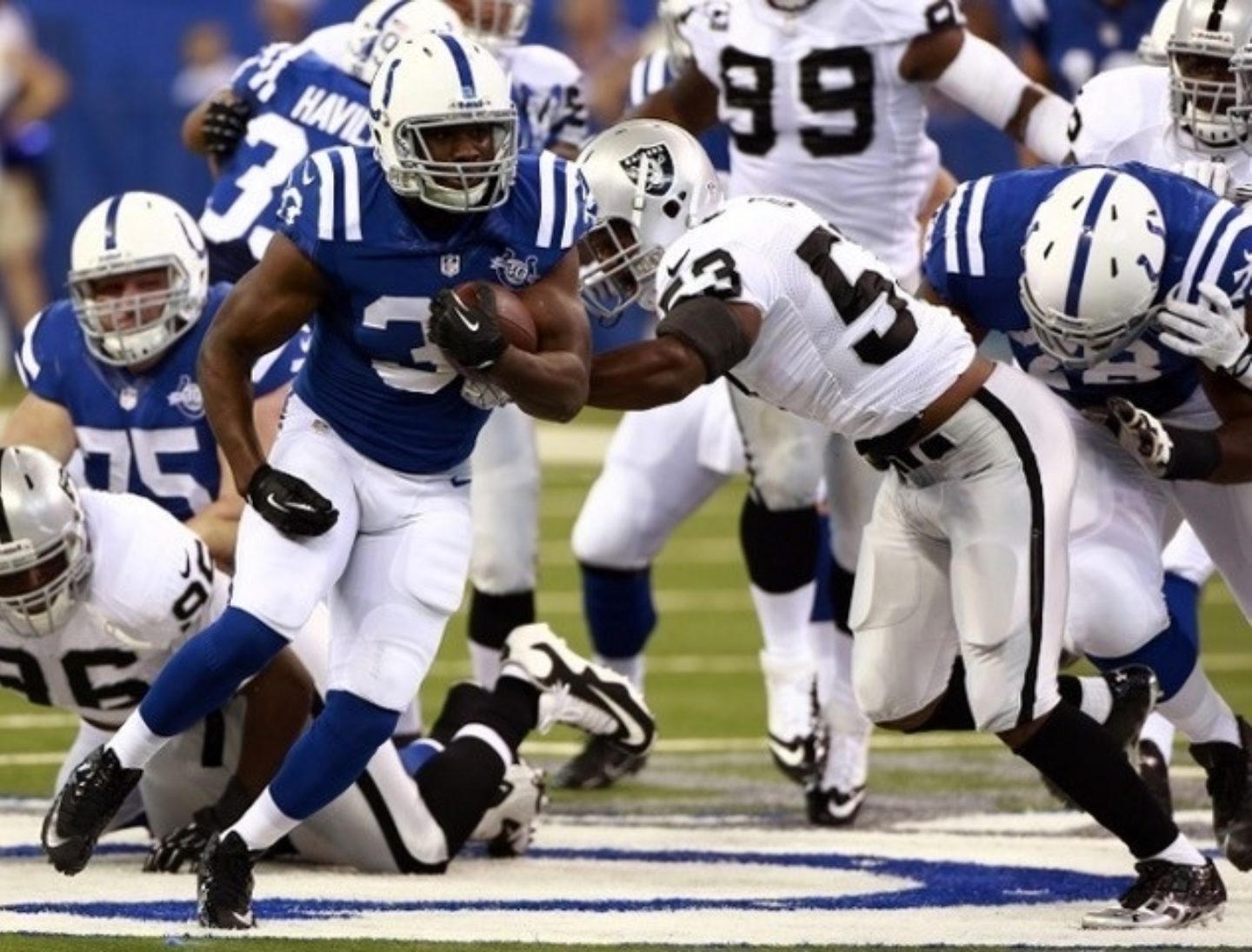
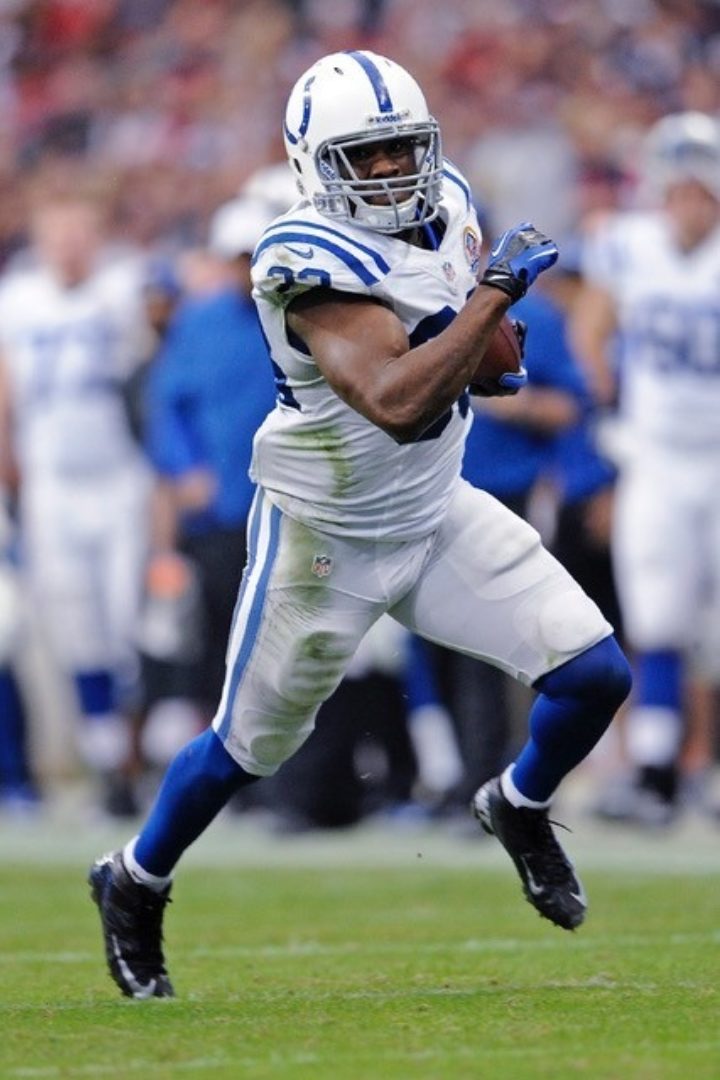
Drafted by the Indianapolis Colts in 2012, Ballard’s playing career was interrupted by a series of devastating injuries, including ACL and Achilles tears that tested both his body and resolve. When the game ended, uncertainty followed.

I was trying to figure out what I was going to do, and I got a call from (The Trust Executive Director) Zamir (Cobb),” Ballard recalled during a December Zoom conversation. “He asked me what my plans were. I told him I wanted to go back to school. He said, ‘Well, you know we give a scholarship for that.’ They flew me out to D.C. and started telling me about all the benefits I had available to me.

With support from The Trust (Powered by the NFLPA), Ballard returned to school at the University of Central Florida, earning a degree in mechanical engineering. He later added a master’s in engineering and an MBA, stacking preparation the same way he once stacked reps.

Today, Ballard applies that discipline as an aeronautical engineer at Lockheed Martin, building a future shaped not by what football took from him, but by what it taught him. Along the way, he’s become an advocate for intentional planning, urging athletes to prepare early for life after sports and to pursue passions that extend beyond the game.

I just wanted to make sure I was giving myself a chance to transition as smoothly as possible,” Ballard said. “What I learned about myself is that I can handle adversity. When adversity strikes, some people freeze. I learned that, to a degree, I am who I think I am. I’ve always considered myself an overachiever—someone who can stare adversity in the face and say, ‘Let’s get it.

Ballard didn’t grow up dreaming about blueprints.

He dreamed about daylight between himself and the defense.

In Pascagoula, Mississippi—a town where football starts before you know what football is—Ballard was six years old when he first put on pads. Too big to carry the ball, coaches placed him where collisions happened quickly and quietly along the offensive line and as a fullback. The grit positions.

It took four years before anyone handed him the ball and said, run.

When they finally did, he didn’t stop.

Ballard moved through high school without the spotlight following him. A scholarship from Houston appeared, then disappeared when the coaching staff was fired. A junior college option at Mississippi Gulf Coast waited patiently. On signing day, Jackson State called with a full scholarship. His father told him to sign it.

Ballard didn’t go.

He bet on himself with the quiet confidence of someone who understood odds before he understood consequences. Junior college wasn’t glamorous. In his first year, he was moved back to fullback, away from the position he loved and the one recruiters watched. He didn’t complain. He scored touchdowns anyway. As a backup. From a role he didn’t want.

The next year, they moved him back to running back.

He broke every school record.

Mississippi State followed. The SEC followed. In his first Division I season, Ballard led the conference in rushing touchdowns. The NFL entered his mind not through a scout or highlight, but through a question from an academic advisor.

“Are you leaving early?”

He went home and sat with that question longer than he expected.

“The NFL had never crossed my mind,” Ballard said. “But when she asked me that, I thought, ‘If she’s asking, I must be at least good enough.’ That thought never left. My senior year, that became the goal. Eventually, I got drafted in the fifth round.”

The league moved fast. In a locker room full of men who hit harder and expected you to know things before you were taught them, Ballard made rookie mistakes and eventually stopped making them. By season’s end, he was part of the rotation.

By year two, he was the starter.

Ask Ballard about his proudest NFL moment, and he doesn’t mention touchdowns. He talks about a playoff loss to Baltimore - Ray Lewis’ final run. A stat line coaches circle: perfect in pass protection. A game that told him he belonged as he finished with 91 yards and 22 carries.

Then his body interrupted the story.

Week two of 2013, his knee went the wrong way. ACL. A year vanished into rehab rooms and calendars crossed off in pen. When he returned, optimism filled training camp—until a pop he didn’t need explained. Achilles. Two seasons gone.

“I was never really the same,” Ballard said.

Indianapolis stayed patient longer than most teams do. They let him heal. Trusted the memory of what he’d been. But bodies remember, even when minds want to forget. Hamstrings followed. Another training camp slipped away. He played one preseason game and got hurt again.

Roster math has no sentiment. He understood that part. New Orleans gave him a chance. A month later, they didn’t.

“I’m a rational thinker,” Ballard said. “I knew I wasn’t the same player. As long as I had an opportunity, I was going to pursue it. But eventually you have to be realistic and start preparing for Plan B.”

That call from The Trust opened the door to something beyond the gridiron. Ballard had always been mechanically inclined. Engineering felt like continuity, not departure.

He applied. Central Florida accepted him. He started over.

Credits didn’t transfer. Physics demanded humility. He took prerequisites alongside students younger than him in his career. He stayed late. He learned to see systems the same way he once saw holes open before they existed.

When a Trust fellowship opportunity appeared, he took it. For the first time since leaving the league, he felt at home in a building again—football-adjacent without being football. He learned how transitions succeed or fail. How players like him are supposed to land safely.

Ballard graduated with a degree in mechanical engineering. Lockheed Martin hired him before the diploma cooled. Atlanta first. Texas later. Systems testing. Integration labs. Eventually, aeronautical engineering analysis is used instead of collisions. Aircraft instead of defenders. Stress loads instead of blitzes.

He wears NASA shirts to meetings. Not ironically.

“Only you know what you want to do, or at least have some type of curiosity in one direction,” Ballard said. “If you explore that direction or that curiosity, eventually it's going to turn into a passion, and once it turns into a passion, now you have a new career. You have something to wake up and look forward to.”

While working full-time, Ballard earned a master’s degree and moved within one class of an MBA. He talks about equations the way he once talked about blocking assignments—precise, accountable, complete.

Corporate hallways brought a new challenge. Ballard often finds himself in rooms where few people look like him or come from where he comes from.

“Every day I go to work, I feel like a unicorn,” he said. “There’s a stereotype about engineers. That transition was hard, and it’s still something I’m navigating—figuring out how to be my authentic self in a space where I feel different.”

He doesn’t frame his story as a reinvention.

It’s continuity.

Same discipline. Same audacity. Different field.

“A lot of people questioned me going back to school for engineering,” Ballard said. “That’s fine. It’s not a typical transition for athletes. But I had the audacity to be curious—and to see it through. If anyone out there is contemplating something but feels like they can’t do it, just have the audacity to go grab it.”

This article was written by Rob Knox for The Trust. Knox is an award-winning professional, a member of the Lincoln (Pa.) Athletics Hall of Fame, and adjunct instructor at Temple University. In addition to having work published in SLAM magazine, the Philadelphia Inquirer, the Washington Post, and Diverse Issues In Higher Education, Knox enjoyed a distinguished career as an athletics communicator for Lincoln, Kutztown, Coppin State, Towson, and UNC Greensboro. He also worked at ESPN and for the Delaware County Daily Times. Recently, Knox was honored by CSC with the Mary Jo Haverbeck Trailblazer Award and the NCAA with its Champion of Diversity award. Named an HBCU Legend by SI.com, Knox is a graduate of Lincoln University and a past president of the College Sports Communicators, formerly CoSIDA.
The Trust is here to support you.
Ready to learn how?

Related Spotlights

Spotlight

Montee Ball

After the game ended, Montee Ball found purpose in presence, recovery, and hope.

Spotlight

Kris Wilson

From NFL star to Emmy-winning storyteller, Kris Wilson turns grit into film magic.

Spotlight

Ryan Kuehl

From NFL grind to life-changing innovation - Ryan Kuehl's turning purpose into impact.