Scottie Graham's impact didn't end when his playing career did. After six seasons in the NFL, he built a career spanning player advocacy, event leadership, college athletics, and coaching, all while staying grounded in the values that guided him through every transition: integrity, leadership, communication, and growth.
Spotlight
Scottie Graham
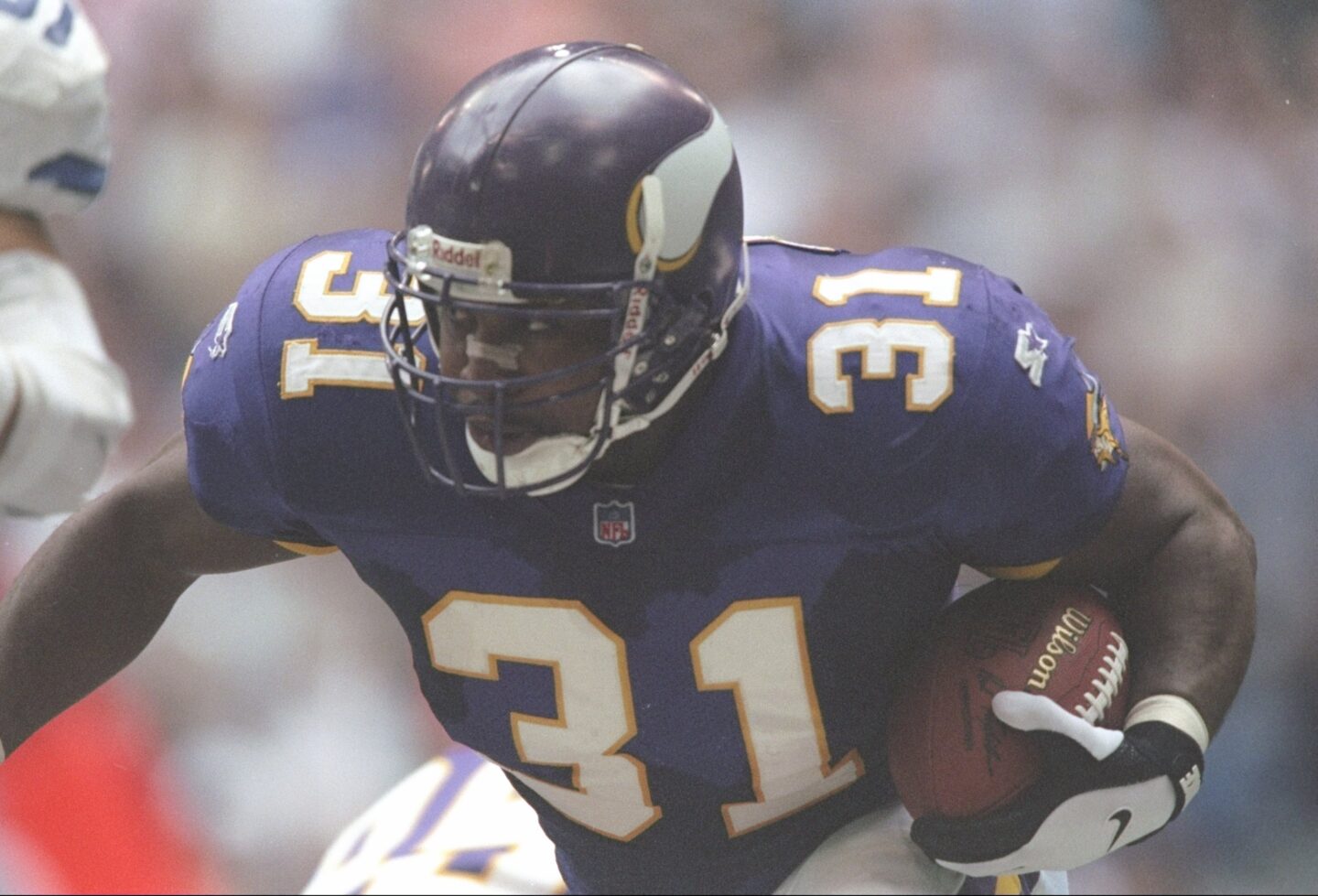
Scottie Graham's post-playing career extended far beyond simply staying connected to football.
A Long Beach, New York native and Ohio State graduate, Graham, who played six years in the NFL, turned to resources available through The Trust (Powered by the NFLPA) as he pursued new opportunities beyond his playing days.
Graham's duties and accomplishments with the Players' Association reached across the organization. He worked with current and former players, as well as key stakeholders, on a wide range of matters, including multimedia rights, marketing, licensing, and sponsorships. The two-time Ohio State graduate also played a pivotal role in ratifying the NFL's $47.1 billion collective bargaining agreement in 2006, while enhancing player benefits and raising money for the Native Vision Life Skills Camp, a charity for Native American children in the Southwest.
He helped organize and manage cornerstone NFL events, including the Combine, Rookie Symposium, Board of Player Representative Meetings, and the Former Players Convention, experiences that sharpened his leadership, communication, and operational skills while deepening his understanding of the business side of sports.
After his tenure with the NFLPA, Graham transitioned into college athletics and coaching, where he is currently entering his third year working with the University of Washington's running backs.
Throughout his career, Graham has navigated multiple transitions, moving from player to executive, mentor, educator, and coach while remaining grounded in the same values that guided him from the beginning.
Even after building a successful playing career and later working in leadership roles with the NFLPA and coaching, Graham admits the transition never became easy. What changed was his willingness to move forward despite uncertainty.
“ Part of The Trust resources is talking about transition,” Graham said. “For me, it's always a fearful thing. But once you transition and decide you're going to change your career, it becomes easier if things don't work out the way you want. The Trust helped guide me to resources on How to get another job? How do you move? How do you navigate this space of the unknown? ”
The main themes throughout his life have been leadership, integrity, transition, consistency, communication, and lifelong growth. One of his strongest points regarded the quiet steps that sculpt reputation. Graham repeatedly emphasized that his keys to success were being on time, communicating clearly, doing what you say you'll do, and operating with integrity. He believed those habits allowed him to remain "unscathed" professionally while building trust across industries.
“I've just been able to take what a lot of people take for granted, which is that my reputation has pretty much been kept,” Graham said. “I set a goal standard for myself, and I've been able to swim in this industry unscathed by the glory of God.”
Graham's faith and discipline have shaped his mindset. One of his go-to Bible verses has always been Philippians 4:13. It has provided the foundation for his confidence and ambition from a young age. He connects faith with hard work, saying that belief alone isn't enough; you must back it up with a determined work ethic.
“I got saved when I was 13 years old, so I was destined,” Graham said. “As a 13-year-old, I was going to do something incredible. There was no doubt in my mind. … Work and labor are two different things. When you're working for something, there's an outcome. If you put the work in and you get some luck, which is created by opportunity and hard work, you have a chance. I'm a goal setter. I reach goals.”
One of those goals was running a half-marathon in April of this year. He completed the 13.1-mile distance in two hours, 15 minutes, 40 seconds. Of course, he immediately shared afterward that it was the first and only time he would run a half-marathon. During the race, Graham FaceTimed with his players.
The point wasn't simply finishing the race. It was proving to himself and to his players that goals mean little without the discipline to finish them.
Graham has always led by example, and one of his most powerful leadership philosophies is simple yet deeply intentional: "Learn you, love you, then lead you." For Graham, leadership begins with genuinely caring about people first.
He believes athletes and young people won't truly learn from you until they know you care about them beyond their performance. Throughout his career, Graham has emphasized empathy, relationship-building, accountability, and trust over transactional leadership.
Consistency has created numerous opportunities for Graham, who believes discipline through daily habits matters. He frames success as ordinary people repeatedly doing the right things with conviction. Graham is also a lifelong learner who consistently emphasizes education and development, whether through earning degrees, helping student-athletes value education, continuing to grow personally, or staying adaptable in rapidly changing college athletics environments.
“I'm a normal dude that just decided I want to do it right every day,” Graham said. “Everything you do, you've got a plain canvas. Everything you do is a brushstroke on that painting, telling me who you are. If you have integrity, it's going to show me that you do. It's going to show me. And that's what I'm going to believe: what you show me.”
Graham made his rookie debut with the New York Jets during the 1992 season before spending four years with the Minnesota Vikings. The running back broke a Vikings' record for rushing yards in consecutive games with 166 yards vs. the Kansas City and 139 against the Packers in 1993. Graham rushed for 1,267 yards in the NFL without fumbling in his six seasons, and he received the Ed Block Courage Award in 1996.
Graham believes that long-term success comes from consistency, faith, integrity, communication, discipline, and a genuine commitment to people, while remaining adaptable through transitions. He also emphasized the importance of his family as key to staying balanced. Graham is proudest not simply of jobs or titles, but of being married for 35 years to his wife, Mary, of his two children, Dennis and Marika, earning college degrees, of personal growth, and of sustaining meaningful relationships.
“ Leadership sometimes is not comfortable, but it's necessary, and it's needed,” Graham said. “There are two types of people, people who cause problems and people who solve problems. If you can solve problems, you become uniquely qualified and employable immediately. So being able to figure something out and problem-solve it is something you work on. It's not that you wake up tomorrow and say I want to be a problem solver. ”
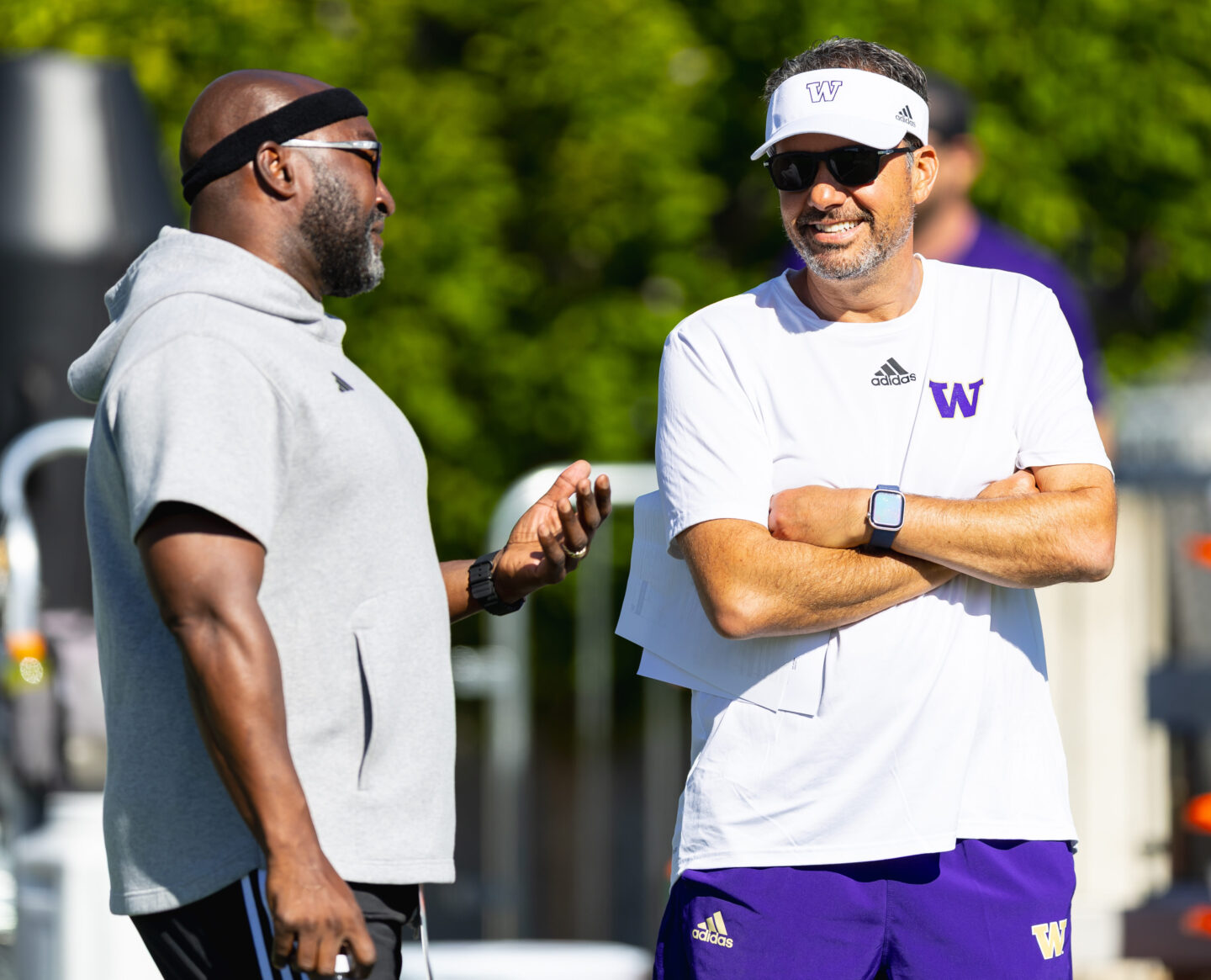
For all the places football has taken Graham — from NFL locker rooms to board meetings to college sidelines — Graham's life has been built on the quieter things that rarely make headlines: integrity, communication, discipline, faith, and consistency.
Graham still believes leadership begins long before strategy, status, or results. It starts with learning people and loving people. Then, reminding them they are valued beyond performance.
Graham's story is ultimately one of continual evolution. Whether as a player, executive, mentor, coach, husband, father, or leader, he has embraced every new chapter with the same mindset: keep learning, stay disciplined, communicate clearly, and lead with integrity.
For former players navigating their own next chapter, his journey offers a powerful reminder that a title doesn't define success after football. It's defined by the willingness to keep growing long after the game is over.
Rob Knox, a freelance writer for The Trust, is an award-winning professional, a member of the Lincoln (Pa.) Athletics Hall of Fame, and an adjunct instructor at Temple University. In addition to having work published in SLAM magazine, the Philadelphia Inquirer, the Washington Post, and Diverse Issues In Higher Education, Knox enjoyed a distinguished career as an athletics communicator for Lincoln, Kutztown, Coppin State, Towson, and UNC Greensboro. He also worked at ESPN and for the Delaware County Daily Times. Recently, Knox was honored by College Sports Communicators with the Mary Jo Haverbeck Trailblazer Award and by the NCAA with its Champion of Diversity award. Named an HBCU Legend by SI.com, Knox is a graduate of Lincoln University and a past president of the College Sports Communicators, formerly CoSIDA.
Trust Spotlights
-
Spotlight
Alphonse Dotson
From NFL lineman to vintner, Alphonse Dotson is cultivating a lasting legacy
-
Spotlight
Kevin Curtis
Kevin Curtis built his next chapter with faith, fitness and The Trust
-
Spotlight
Reggie Kelly
From the gridiron to the kitchen, Reggie Kelly found a lasting recipe for life after